Houston lawns never fully hibernate; they idle. The two dates that matter most: get pre-emergent down by mid-February, when soil temperatures hit 55°F here, and start watching for large patch fungus in October when night temperatures drop below 70°F. Everything in between is rhythm.
The year at a glance
Most lawn calendars are written for a climate with a real winter. Houston's official normals show an average annual temperature above 70°F and nearly 55 inches of rain a year, so the schedule for lawn care in Houston starts earlier, runs longer, and leans harder on disease and insect watch than anything you will read for the rest of the country. Here is the whole year in one table; the month-by-month detail follows.
| Month | What to do | Watch for |
|---|---|---|
| January | Clean up beds, sharpen mower blades, service irrigation | Winter weeds in thin turf |
| February | Pre-emergent herbicide down by mid-month; no fertilizer yet | Soil hitting 55°F, which triggers crabgrass germination |
| March | First mows as green-up starts; refresh bed mulch to 2 to 3 inches | Scalping St. Augustine; it never recovers well from it |
| April | First feeding after two or three mows of actively growing grass | Take-all root rot: yellow patches with blackened roots |
| May | Weekly mowing begins; raise the cut height before the heat | Irrigation coverage gaps showing up as dry streaks |
| June | Hurricane season opens; walk drains and gutters once; water deeply and infrequently | Clogged grates and downspouts before the first named storm |
| July | Water about an inch a week including rain, before sunrise; skip heavy fertilizer | Chinch bugs on hot, dry edges along concrete |
| August | Hold the summer rhythm; mow tall, water deep | Chinch bugs continuing; first fall armyworm moths late in the month |
| September | Second feeding of the year early in the month | Fall armyworms: chewed blades, green stems, moths kicking up when you mow |
| October | Cut watering frequency; water only in early morning; fall pre-emergent by mid-month | Large patch rings once nights drop below 70°F |
| November | Mow leaves into the turf while the layer is thin; last feeding is already behind you | Leaves matting on the lawn |
| December | Final mow slightly tall; disconnect hoses; insulate backflow preventers and valves | First hard freeze, usually mid-month |
January and February: the setup months
The lawn is mostly dormant and mostly brown; that is normal. Use the downtime to clean up beds, sharpen mower blades, and service irrigation. The one hard deadline: pre-emergent herbicide by mid-February. Houston soil hits 55°F weeks before most lawn-care advice written for the rest of the country assumes, and once crabgrass germinates, pre-emergent does nothing. Do not fertilize yet; feeding dormant grass feeds winter weeds instead.
March: first mows
Green-up starts. Begin mowing when the lawn needs it, and resist the urge to scalp. One low mow to clear dead blades is fine for Bermuda, but St. Augustine should never be cut short. (If you are still deciding which grass you have or want, start with our guide to St. Augustine, Bermuda, and Zoysia in Houston.) Refresh mulch in beds to 2 to 3 inches before the heat arrives.
April: first feeding
Fertilize after you have mowed actively growing grass two or three times; in Houston that is usually early-to-mid April. Watch spring St. Augustine for take-all root rot: yellowing patches where grass pulls up easily with rotted, blackened roots.
May: settle into the rhythm
Weekly mowing from here through September. Raise the cut height going into the heat; taller grass shades its own roots and needs noticeably less water.
June through August: survive the heat
Atlantic hurricane season opens June 1. Walk the property once and confirm drains and gutters are clear before the first named storm, not after (our drainage guide has the pre-season checklist). Water deeply and infrequently: about an inch a week including rain, ideally before sunrise. From July, patrol the hot dry edges along concrete for chinch bugs. Texas A&M AgriLife describes the damage as expanding, irregular patches of dying grass, often next to driveways and sidewalks; straw-colored patches that do not respond to watering are the tell. Skip heavy fertilizing during triple-digit stretches; stressed grass cannot use it.
September: armyworm watch
Fall armyworms arrive most years in late August or September, and a bad outbreak can strip a lawn in days. If you see moths kicking up when you mow, or brown patches with chewed blades and green stems, treat immediately. Early September is also the time for the year's second feeding.
October: fungus season
When night temperatures drop below 70°F and the lawn stays damp, large patch season begins for St. Augustine and Zoysia: rings of orange-brown turf, often in the damper parts of the yard. Cut back watering frequency, water only in the early morning, and put down fall pre-emergent for winter weeds by mid-October.
November and December: coast down
Mowing slows to leaf management. Keep leaves from matting on the turf; mulch-mow them if the layer is thin. Before the first hard freeze: disconnect hoses, insulate backflow preventers and exposed valves, and leave the grass a touch taller going into dormancy. Prune crape myrtles lightly if at all. Topping them into stubs (the local ritual sometimes called crape murder) ruins their structure and is never required for bloom.
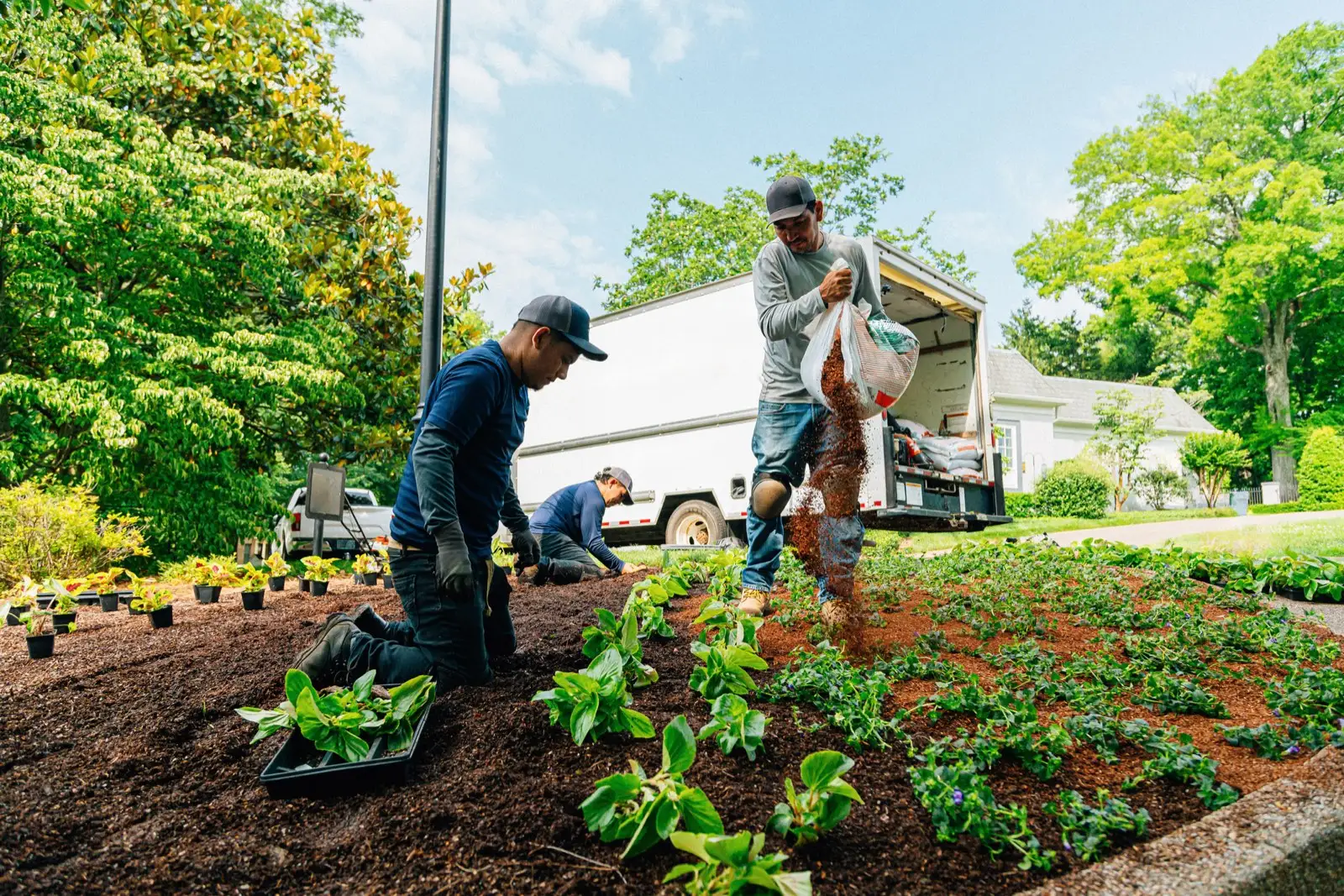
Or let a crew keep the calendar
Every date above is already on the schedule for Greenline residential customers: pre-emergent in February, feedings in April and September, and treatments the week a problem shows up rather than the month after. If you would rather not track it yourself, request a quote and we will put your lawn on the calendar.